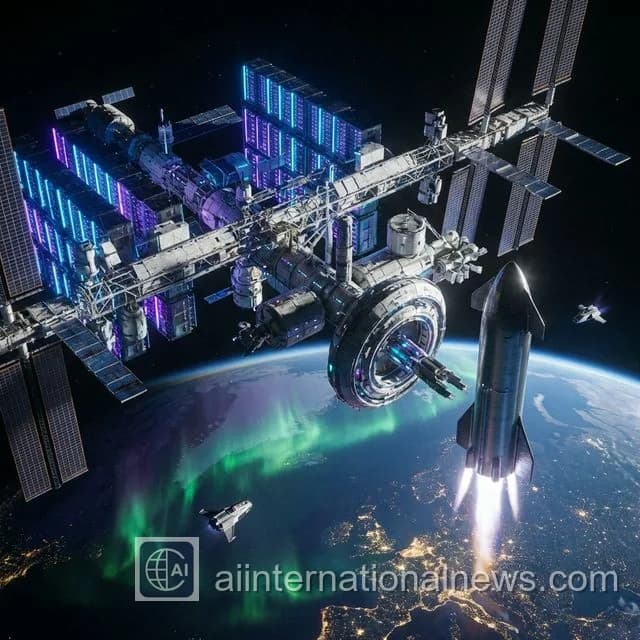
Abhijeet's Take: I initially thought this was sci-fi nonsense. But after seeing the 2026 energy consumption reports for GPT-6 training runs, it’s the only logical step. Earth simply doesn't have enough power grids to support the next generation of AI. Space has 24/7 solar. Ideally, it's a perfect match.
Why Go to Space? The Earth is "Full"
It sounds like a villain's plan from a Bond movie, but the logic is terrifyingly sound. In 2026, AI data centers are consuming more electricity than entire countries like Argentina or Sweden.
We are hitting a hard wall. Power grids in Virginia, Ireland, and Singapore (major data hub spots) are rejecting new data center applications. There is literally no power left.
Enter Elon Musk and Google.
The Earth vs. Space Economics:
- Earth Cooling: 40% of energy goes to AC/Cooling fans.
- Space Cooling: Near absolute zero (-270°C). Free cooling.
- Earth Power: Intermittent solar/wind/coal.
- Space Power: 24/7 unfiltered Solar Energy.
- Land Cost: Billions for real estate.
- Space Cost: Launch costs (Starship made this cheap).
The Plan: "Starlink for Compute"
The concept isn't just about communication satellites anymore. The rumor is a "Constellation of Floating GPUs." Imagine thousands of satellites, each equipped with NVIDIA Blackwell or specialized TPUs, processing data in orbit.
You send a prompt from Earth. The satellite processes the inference. It beams the answer back.
Who is Leading the Race?
| Company | Project / Rumor | Key Advantage |
|---|---|---|
| SpaceX / xAI | "Orbital Dojo" | Starship launch capacity (Cheap) |
| Project SkyServer | TPU efficiency & Solar tech | |
| Microsoft | Azure Space | Already has ground stations |
The Big Problem: Latency (Ping)
This is the elephant in the room. Light takes time to travel. Even to Low Earth Orbit (LEO), there is a delay.
Reality Check: Space AI won't be for real-time gaming or high-frequency trading. The physics forbids it. But for AI Training (which takes months) or batch processing (generating videos, medical research), latency doesn't matter. Training GPT-7 in space makes perfect sense.
Environmental Impact: Green or Space Junk?
While moving energy-hungry servers off-planet sounds "Green" for Earth (reducing carbon emissions significantly), it introduces the risk of Kessler Syndrome—too much space debris.
If we launch 10,000 server satellites, and one crashes, the debris field could lock us on Earth for decades. Regulators in the EU are already drafting "Space Data Laws" to prevent this.
FAQs
When will the first Space Data Center launch?
Small prototypes like LuminOrbit have already launched in 2025. Mass deployment from big players like Google/SpaceX is expected by late 2027.
Will this make ChatGPT faster?
No, it will likely make it cheaper and smarter. Training costs will drop, allowing for bigger models, but response time might have a tiny lag if processed in orbit.
The Bottom Line
We are running out of power on Earth. The AI industry has two choices: stop growing (impossible) or look up. Space-based AI isn't a luxury; it’s becoming a necessity for the survival of Moore's Law.
What do you think? Would you trust an AI that literally lives in the sky? Or is this just billionaires playing Star Wars? Drop a comment below.