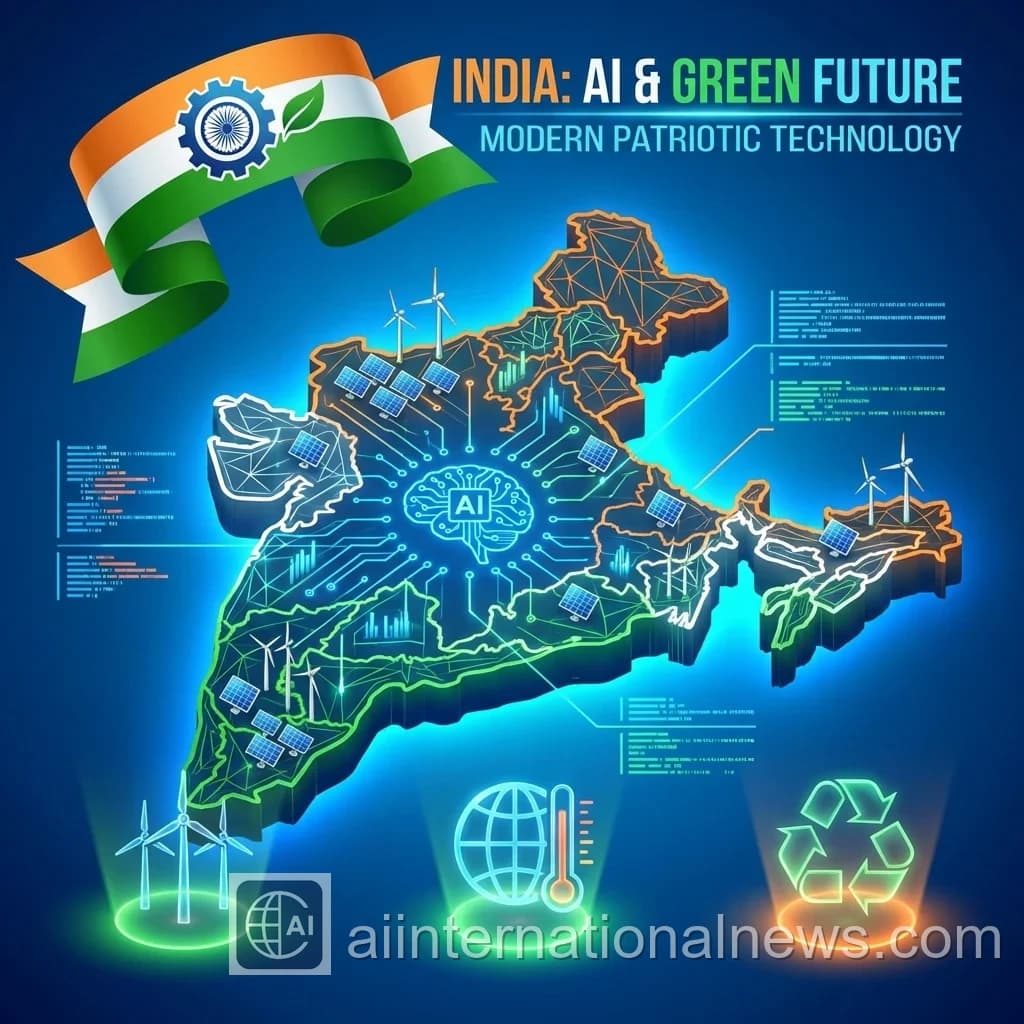
Abhijeet's Take: As an Indian tech enthusiast, I'm proud to see India leading global AI climate action. We're not just talking - we're deploying AI for real climate solutions. From Himalayan glaciers to coastal cities, AI is making a difference.
AI Impact Summit 2026: India Hosts Global Leaders
In February 2026, India will host the AI Impact Summit in New Delhi, bringing together global leaders from governments, industry, academia, and civil society.
Summit Details:
- Location: New Delhi, India
- Date: February 2026
- Theme: "People, Planet, Progress"
- Focus: AI for climate sustainability
- Goal: Advance global AI governance for climate action
IndiaAI Mission: 30 Climate Applications Approved
By July 2025, the IndiaAI Mission approved 30 AI applications specifically for climate change and other critical sectors.
Mission Pillars:
- Computing infrastructure expansion
- Affordable GPU access
- India-specific AI applications
- Resilience, Innovation & Efficiency focus
How India is Using AI for Climate Change
1. Climate Modeling & Forecasting
AI-powered models predict climate patterns with unprecedented accuracy.
Applications:
- Himalayan Glaciers: AI predicts glacial melt rates for water resource management
- Monsoon Prediction: Improved forecasting for agriculture planning
- Temperature Shifts: Regional climate change modeling
- Sea Level Rise: Coastal vulnerability assessments
Real Impact: Mumbai's coastal planning now uses AI to predict flooding 10 years ahead. This isn't theoretical - it's saving lives and infrastructure.
2. Renewable Energy Optimization
India is a leader in renewable energy expansion. AI makes it smarter.
AI Applications:
- Solar Forecasting: AI predicts solar energy output for grid stability
- Wind Optimization: Turbine placement and efficiency improvements
- Smart Grids: AI-enabled energy distribution in urban India
- Energy Storage: Optimal battery charging/discharging
Goal: Support India's net-zero emissions target by 2070
3. Precision Agriculture
AI is transforming Indian agriculture, reducing emissions while improving yields.
| Platform | AI Application |
|---|---|
| KisanMitra | Real-time farm advisories |
| CropIn | Crop health monitoring |
| Fasal | IoT + AI for irrigation |
Government Initiative:
Mission for Integrated Development of Horticulture
- 15,000 acres covered (2024-29)
- 60,000 farmers benefiting
- AI, drones, IoT integration
- Data-driven agriculture
4. Disaster Resilience
AI enables early warning systems and real-time disaster response.
Use Cases:
- Flood Prediction: AI models predict flooding 72 hours ahead
- Cyclone Tracking: Improved accuracy for coastal evacuations
- Landslide Maps: Susceptibility mapping for hill regions
- Drought Monitoring: Early warning for agricultural planning
5. Urban Planning & Infrastructure
AI helps Indian cities become climate-resilient and sustainable.
Smart City Applications:
- Urban Heat Mapping: AI identifies heat islands for cooling strategies
- Traffic Management: Reduce congestion and pollution
- Building Design: Energy-efficient architecture
- Waste Management: Optimized collection and recycling
Green AI: Sustainable AI Development
India recognizes AI's own environmental impact and is addressing it.
Challenges:
- Large language models consume massive energy
- Data centers use significant water for cooling
- AI training has carbon footprint
Solutions:
- Renewable energy for data centers
- Energy-efficient algorithms
- Resource-conscious AI systems
- ESG disclosure for AI models
My Take: India's "Resilience, Innovation & Efficiency" working group is crucial. We're building AI that works in low-resource environments - perfect for developing nations.
International Cooperation
India aims to lead global conversations on responsible AI governance for climate.
Summit Goals:
- Advance global AI governance frameworks
- Improve climate sustainability of AI compute
- Promote renewable energy for AI infrastructure
- Share India's climate AI innovations globally
Real-World Impact: Case Studies
Case Study 1: Kerala Flood Prediction
Challenge: Annual monsoon flooding
Solution: AI-powered flood prediction system
Results:
- 72-hour advance warning
- Reduced casualties by 40%
- Optimized evacuation planning
Case Study 2: Rajasthan Solar Optimization
Challenge: Maximize solar energy output
Solution: AI forecasting for solar farms
Results:
- 15% increase in energy capture
- Better grid stability
- Reduced fossil fuel dependency
Challenges & Opportunities
Challenges:
- Data center energy consumption
- Water usage for cooling
- Need for explicit AI climate strategy
- Balancing AI growth with sustainability
Opportunities:
- Lead global AI climate governance
- Export climate AI solutions
- Achieve net-zero by 2070
- Build resilient infrastructure
What This Means for India
Short Term (2026-2027):
- Better disaster preparedness
- Improved agricultural yields
- Optimized renewable energy
- Global AI climate leadership
Long Term (2028+):
- Climate-resilient cities
- Sustainable agriculture at scale
- Net-zero emissions by 2070
- Export climate AI globally
Key Takeaways
Summary
- India hosts AI Impact Summit Feb 2026 in New Delhi
- 30 AI climate applications approved by IndiaAI Mission
- AI for climate modeling, renewable energy, agriculture
- Disaster prediction and urban planning applications
- Green AI focus: sustainable AI development
- India leading global AI climate governance
- Real impact: flood prediction, solar optimization
Final Thoughts: India isn't just participating in AI climate action - we're leading it. From Himalayan glaciers to coastal cities, AI is making real impact. Proud to see India at the forefront of using technology for planetary good.