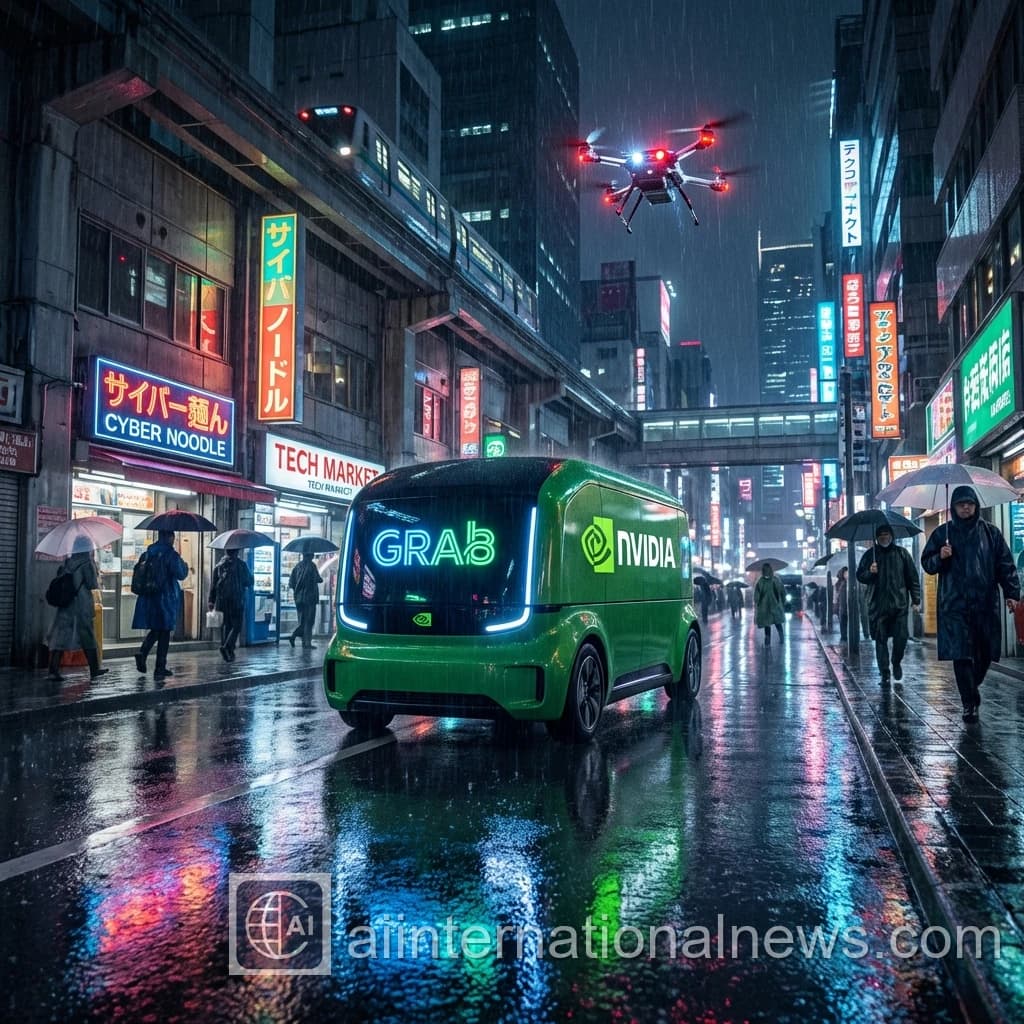
2026 is the year of Physical AI. While we argued about chatbots, Grab quietly acquired robotics firm Infermove to automate the "last mile" of delivery. And they aren't alone.
Abhijeet's Take: I remember seeing the first clumsy delivery bots in 2022. They got stuck on curbs. The new generation, powered by NVIDIA's Jetson Thor chips, can parkour. Okay, maybe not parkour, but they negotiate heavy traffic better than most human drivers I know.
The Big News: Grab + Infermove
Grab, the Southeast Asian super-app, has made a bet on hardware. By acquiring Infermove, they aim to replace the most expensive part of delivery: the human driver's final 500 meters.
Why This Matters
- Cost: Robots don't need tips or sleep.
- Efficiency: Infermove's "Swarm Logic" allows 20 robots to be managed by 1 human.
- Scale: Grab plans to deploy 5,000 units in Singapore by Q4 2026.
NVIDIA's Role: The Brains Behind the Bots
At CES 2026, Jensen Huang unveiled the "Project GR00T" roadmap. He called it the "ChatGPT moment for Robotics".
| Concept | Old Way (2024) | New Way (2026) |
|---|---|---|
| Learning | Hard-coded rules | Imitation Learning (AI watches humans) |
| Vision | LiDAR maps | Vision-Language Models (VLM) |
| Brain | CPU/Basic GPU | NVIDIA Jetson Thor (GenAI on-chip) |
Will Humans Lose Jobs?
Short answer: Yes.
Long answer: Not immediately. Robots struggle with stairs, elevators, and angry dogs. But for "curbside delivery", the human courier is becoming obsolete.
Reality Check: We often fear the "Terminator". The reality is boring: it's a green box on wheels delivering your bubble tea. The revolution isn't violent; it's convenient. And convenience always wins.
What's Next?
Expect to see dedicated "Robot Lanes" on sidewalks in major cities like Singapore, Tokyo, and San Francisco by 2027. The Physical AI era has officially begun.