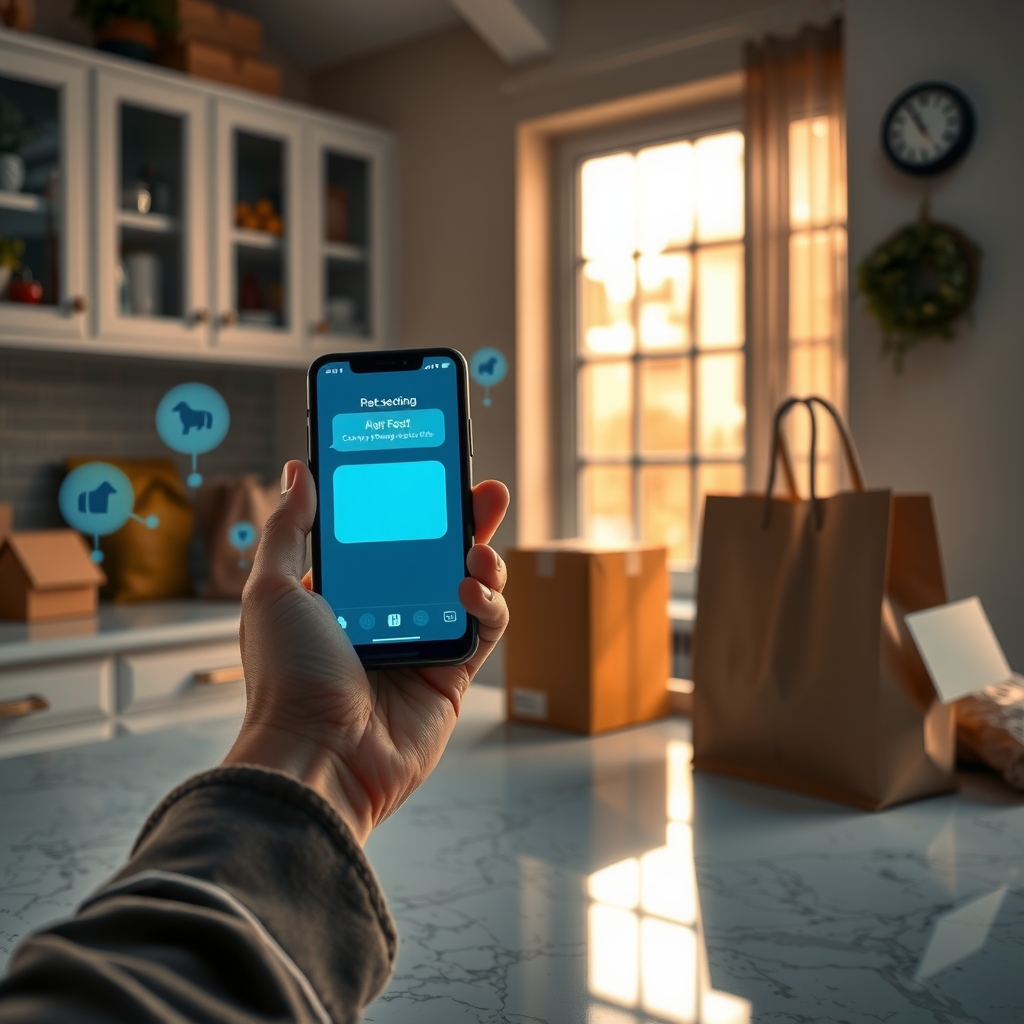
Amazon is beginning to move Alexa for Shopping beyond its app and website and into the ordinary text-message thread. Announced Nov. 6, 2026, the invitation-only U.S. rollout lets a limited group of customers ask the assistant to find products, compare options, assemble carts and complete purchases. Amazon says the service will reach millions more customers over the coming weeks, but the announcement does not establish a precise public launch date or explain every safeguard for purchases made through messaging.
What is launching
Amazon’s announcement describes a new way to reach Alexa for Shopping, its AI shopping assistant: customers can send shopping requests by text rather than opening the Amazon Shopping app or visiting Amazon.com. The company’s announcement, published Nov. 6, presents texting as another access point for an existing assistant, not a new standalone store or a replacement for checkout across Amazon’s services.
That distinction matters. The feature makes messaging an interface for discovery and shopping tasks, while the underlying commercial relationship remains tied to an Amazon account, its product catalogue and its order systems. Amazon says customers begin by accepting terms and linking a phone number. After that setup, shoppers can send ordinary-language requests and receive product suggestions or other replies in the same thread.
Reuters, in a report carried by the Idaho Statesman on Nov. 6, independently reports that Amazon said U.S. customers would be able to use the AI-powered assistant by text to search for products and make purchases. Reuters also confirms that the initial group is small and invitation-only, before a broader launch in the coming weeks. The agreement between the company announcement and the wire report corroborates the central news, although both accounts ultimately rely on Amazon for rollout details.
How shopping by text works
Amazon’s examples range from simple reorders to more open-ended research. A customer might ask for dog food, request a birthday present needed by Saturday, or describe a grocery order. Alexa for Shopping can search for products, compare options and message back with suggestions. Amazon says customers can then add items to a cart and have the assistant complete the purchase on their behalf. The company does not publish in this announcement a complete technical explanation of how the text conversation authorizes each transaction.
Some tasks are informational rather than transactional. A shopper could ask for product comparisons, check deal activity or request a price-history view. Amazon says the assistant can track a price and alert the customer if an item reaches a target, and can answer questions about orders. These examples suggest that the text thread is intended to handle shopping before, during and after checkout rather than simply act as a command box for buying.
Requests can include context and images
The announcement also says users can send a photo—for example, an outfit spotted while scrolling—and ask for similar products. A recipe image could be used to identify ingredients for a grocery cart. This expands the interaction beyond typing a product name, but Amazon’s announcement does not describe image retention, processing details, accuracy rates or limits. Shoppers should treat those as capabilities Amazon says are available, not as independently evaluated performance claims.
Other examples involve lists, recurring needs and time-sensitive errands. A customer can request a weekly grocery order, add an item to a prior order, create a gift list or ask for laundry detergent bought previously. Requests can be revised conversationally. As with any AI-assisted catalogue search, however, conversational convenience does not ensure that a suggested size, quantity, brand or delivery window will match the shopper’s intention. Reviewing suggestions and order details remains prudent.
Who can use it and when
The launch is limited at first. Amazon says a subset of U.S. customers are receiving invitations, with the service beginning to roll out on announcement day. Customers who have access must accept the terms and link a phone number. People who have not been invited can register interest through Amazon’s landing page; signing up is not the same as receiving immediate access. Amazon says the option will expand to millions more customers in the coming weeks, without naming a date when all U.S. customers will be eligible.
The U.S. scope is explicit in both the company announcement and Reuters’ account. Neither source says that international customers are included in this initial texting launch. Nor does “millions more” specify a final eligible population, an exact sequence of invitations, or whether access depends on account status, carrier, device or other criteria. The safest description is a staged, U.S.-only invitation rollout according to the available reporting, with broader access planned rather than already universal.
Amazon’s launch language describes texting as a convenient complement to the app and website. The company also says a conversation started by text can carry across Alexa for Shopping in the app, on Amazon.com and on Alexa-enabled devices, and vice versa. That continuity could help a shopper begin a task away from a screen and finish it later, although the announcement does not state that every conversation or function is available identically across each channel.
Convenience and delegated buying
The most consequential part of the feature is not that Alexa can return product links; it is Amazon’s assertion that it can act. Its examples include building a cart, reordering an item and completing a purchase. That shifts the user experience from search-and-click toward delegation: customers describe an outcome, the assistant interprets it, and the customer may approve or otherwise direct the next step through the conversation.
That framing raises practical questions consumers should consider. When a request is broad—“order more dog food,” for instance—the relevant product may be inferred from order history or preferences. A text exchange offers an opportunity to inspect suggestions, but the exact confirmation flow is not fully specified in the announcement. Users should verify item identity, quantity, price, shipping address and delivery timing before allowing an order to go through, and should check order confirmations afterward.
Amazon describes purchase completion as happening on the customer’s behalf, and its examples include “with your approval” for a detergent reorder. This suggests approval can be part of at least some purchase flows, but it is not enough to establish that every purchase requires the same explicit confirmation. The company’s announcement does not document the full range of automatic-buy settings or transaction controls in the text channel. Treating all purchases as requiring a final tap—or, conversely, assuming they happen without approval—would go beyond what these sources establish.
The convenience proposition is strongest for repetitive, low-consideration tasks: replenishing household staples, managing lists or checking a package. For expensive, personalized or health-related products, a human review of the exact listing and terms remains important. AI-generated recommendations can be incomplete or mistaken; the customer, not the assistant, still bears the consequences of a wrong size, unsuitable product or unwanted purchase.
Personalization, privacy and safety
Personalization is central to Amazon’s pitch. The company says Alexa for Shopping draws on product information and reviews, customers’ shopping history and details they have shared. In its text feature examples, it says the assistant can remember preferences such as wanting vegan products or taking nutritional information into account. It also says the assistant remembers ongoing tasks and preferences as interactions continue. These are company descriptions of service behavior, not independently verified statements about model quality or data practices.
There is an important gap in the launch material: it does not set out how long text conversations, photos or inferred preferences are retained; whether and how conversation data is used to improve models or personalize advertising; what deletion or export controls apply; or how the texting channel handles phone-number changes and mistaken identity. The announcement directs customers to accept terms and link a number, but the page reviewed does not spell out these privacy details. This is not proof that Amazon has no relevant policies elsewhere; it means the announcement alone is insufficient to answer those questions.
Safety claims also require careful boundaries. Neither the Amazon page nor the Reuters-syndicated report provides a detailed account of safeguards against fraudulent texts, account takeover, prompt manipulation, mistaken purchases or unauthorized access to order information. The reports do not establish the authentication method, the handling of opt-outs, or what happens if a phone is shared. Customers should use the official invitation route, be wary of unexpected messages requesting passwords or payment details, and use Amazon’s own app or website to check account activity rather than trusting a text alone.
Because the experience links a phone number to an Amazon account and may surface order and delivery updates in a messaging thread, basic device hygiene matters. Preview notifications can reveal information on a locked screen, and a shared phone can expose a conversation to other users. These are general considerations for messaging-based commerce, not evidence of a particular flaw in Amazon’s implementation. The source material reviewed makes no specific promise about encryption, visibility settings or protections against such exposure.
The wider retail context
Reuters places the announcement amid disputes over AI agents and retailer control. Its report notes Amazon’s recent move to block Meta’s Muse shopping agent from accessing its marketplace, with Amazon alleging unauthorized access and storage of customer credentials. Reuters also reports litigation involving Perplexity’s Comet shopping agent: a court order blocking it was overturned by a U.S. appeals court in August, and the case remains ongoing, according to the report.
Those cases are context, not evidence that Amazon’s own text-based assistant has the same technical behavior or raises the same legal questions. They do highlight a strategic distinction: retailers may welcome their own assistants acting within a controlled account relationship while resisting outside agents that shop on customers’ behalf. For shoppers, the choice of agent affects which product information is accessible, whose policies govern transactions and where conversational data is handled. The available sources do not resolve the broader competition or consumer-protection debate.
Amazon says more than 400 million customers used Alexa for Shopping in the preceding 12 months and that use of its agentic features had grown more than eightfold since the start of the year. Those figures are company-reported metrics and the announcement does not define the measurement method or comparison baseline. They help explain why Amazon is extending the assistant to a familiar channel, but they should not be interpreted as independent evidence of user satisfaction, accuracy or adoption of text shopping itself.
The launch therefore combines a concrete product change with a still-evolving promise. Text messaging reduces the steps needed to state a shopping need, and continuity across devices may make the assistant more present in daily routines. At the same time, an interface that can act on a vague instruction makes transparency, reliable confirmation and clear controls essential. The rollout will be more than a novelty if it can demonstrate that those conveniences work without making customers guess what the system understood or what it is about to buy.
For now, the established facts are modest and specific: Amazon announced the feature Nov. 6; a limited group of U.S. customers is being invited; broader invitations are planned over the coming weeks; and Amazon says the assistant can search, compare, create carts and make purchases through text. Claims about universal access, exact transaction approvals, privacy protections or robust safety guarantees are not established by the two sources reviewed. Prospective users can assess the terms presented during enrollment and should keep an eye on how Amazon explains controls as access expands.
Frequently asked questions
Can anyone text Alexa for Shopping now?
No. Amazon says the feature is initially rolling out by invitation to a small subset of customers in the United States. It plans to expand invitations over the coming weeks. Signing up on Amazon’s interest page is not a guarantee of immediate access.
Can Alexa actually place an order from a text?
Amazon says the assistant can add items to a cart and complete purchases on a customer’s behalf. Its announcement does not fully document the confirmation steps for every type of order. Customers should inspect product, price, quantity and delivery details and follow the prompts before a purchase.
Does the announcement explain how my text messages are used?
Not in detail. Amazon says it uses shopping history and shared preferences to personalize Alexa for Shopping, but the launch page does not specify retention, model-training use, deletion controls or all privacy and security protections for the text channel. Review the terms shown during enrollment for current details.
Is text shopping available outside the United States?
The sources reviewed describe the initial rollout as limited to U.S. customers. They do not announce availability in other countries.
References
- Amazon, “Text, shop, done: Alexa for Shopping is now just a text away,” Nov. 6, 2026. Company announcement and details of features, examples, onboarding and planned rollout.
- Reuters, “Amazon rolls out text-based shopping through Alexa,” carried by the Idaho Statesman, Nov. 6, 2026. Independent wire-service reporting on U.S. availability, invitation-only rollout and industry context.