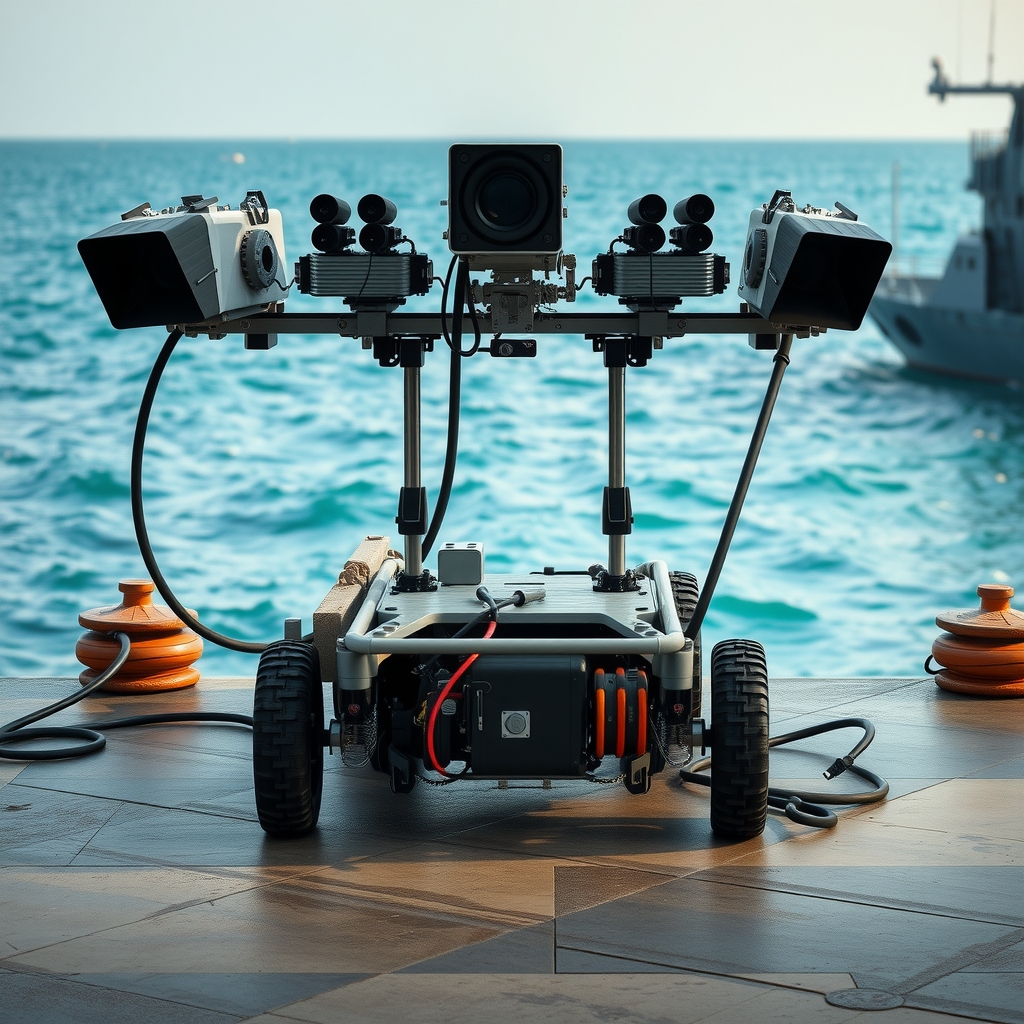
Kochi-based marine robotics startup EyeROV has delivered two TROUT military-grade remotely operated underwater vehicles (ROVs) to the Indian Navy. The systems are part of an order for five vehicles and represent a significant step for India's effort to develop advanced underwater technology at home. Designed for demanding naval and subsea operations, TROUT can support underwater inspection, surveillance and reconnaissance, search and recovery, and robotic intervention.
The delivery was reported by The New Indian Express on October 7, 2026, and covered separately by The Week on October 8. The milestone puts a spotlight on the engineering work required to build reliable robots for environments where visibility is limited, water pressure is high and sending a person directly into the operating area may be difficult or hazardous.
What the Indian Navy received
EyeROV delivered two TROUT systems under an Indian Navy order for five vehicles. According to The New Indian Express, the platform was developed through the Innovations for Defence Excellence (iDEX) ecosystem, under the DISC 7 SPRINT challenge focused on strategically important technology for the armed forces. The Navy acted as the nodal agency for the development programme.
TROUT is a remotely operated underwater vehicle, meaning an operator controls the robot from a surface position rather than the machine independently navigating an entire mission. The platform is intended for underwater inspection, surveillance and reconnaissance, search and recovery, detection, and robotic intervention. These jobs can include inspecting underwater structures, examining hard-to-reach spaces and gathering visual information in conditions that are difficult for divers or conventional inspection methods.
The delivery is a meaningful step from development into practical defence use, but it is important to describe it accurately: two systems have been delivered so far, as part of the reported five-system order. The public reports do not provide a full operational deployment schedule or detailed information about the Navy's planned missions for each vehicle.
What an underwater ROV actually does
An ROV is essentially a robotic platform built to work underwater while a human operator controls its movement and tools. Depending on the configuration, it can carry cameras, lights, sensors and equipment to inspect objects or perform tasks. A vehicle may be sent into a submerged area to collect footage and information without requiring a person to enter that exact space.
For naval operations, such capabilities can be useful around ports, harbours, vessels and underwater infrastructure. Poor visibility, currents, depth and limited access can make inspections complex. A remotely operated vehicle can provide a controlled way to observe an area and support tasks such as searching for objects or checking underwater structures. Its usefulness depends on the specific sensors, manipulators, communications and operating procedures available on the system.
ROVs are different from fully autonomous underwater vehicles. A remotely operated system is controlled by a human operator, while an autonomous vehicle is designed to execute some missions with less direct control. EyeROV also describes a wider portfolio of marine robotics products, but TROUT's reported role is as a military-grade remotely operated vehicle.
Why indigenous development matters
Underwater robotics combines several demanding engineering disciplines: mechanical design, electronics, embedded software, navigation, sensing, communication and robotic control. Those components must work together under pressure, in corrosive saltwater and often in conditions where recovering a failed machine can be expensive or difficult.
Developing a platform domestically can give Indian users and engineers more direct involvement in design, maintenance, upgrades and future configuration changes. It can also help build local expertise in a specialised field rather than relying entirely on imported equipment and external service support. The exact level of domestic content, cost savings and supply-chain independence for TROUT has not been publicly quantified in the reports cited here, so those benefits should be treated as potential strategic advantages rather than measured outcomes.
The iDEX framework is designed to connect defence needs with innovators and startups. For a young deep-tech company, a defence programme can provide a demanding technical problem and a path to testing a product against real user requirements. But the transition from prototype to reliable equipment still depends on qualification, manufacturing consistency, service support and the ability to deliver systems at the required scale.
Testing a military-grade robot
The New Indian Express reported that TROUT underwent field trials and system-level validation covering manoeuvrability, deep-dive capability, performance in strong underwater currents, detection, navigation, endurance and operator control. It also reported that the system went through the Directorate of Quality Assurance (Naval) quality-assurance framework and relevant environmental and operational checks.
These tests matter because a vehicle that works in a controlled demonstration is not automatically ready for routine naval service. Water pressure, currents, visibility, communication constraints and repeated handling all place demands on the design. Qualification helps establish whether a system meets specified requirements under defined conditions; continued service also requires maintenance, trained operators, spare parts and a process for addressing faults.
Public reporting does not disclose every technical specification or classified operational detail. This article therefore does not infer the vehicle's full capabilities, exact depth limits for Navy missions or any undisclosed defence performance figures. EyeROV's public product material lists technical features for TROUT, but advertised specifications should not be mistaken for confirmation of every condition under which the Navy will use the system.
What it means for Indian deep-tech startups
India's startup ecosystem is often associated with consumer apps and software services, but marine robotics shows the longer and more technically demanding path taken by hardware-focused deep-tech companies. A product may require years of design, field trials, integration and qualification before it reaches a customer. The business model also has to account for manufacturing, testing facilities, technical support and the cost of maintaining specialised equipment.
A delivery to the Navy can serve as a reference point for future conversations with other maritime users, research organisations or infrastructure operators. Underwater robots can have civilian applications in ports, dams, pipelines, offshore energy, scientific research and industrial inspection. However, a defence delivery does not by itself prove that a product has won those markets or that the startup is already commercially profitable.
For the wider ecosystem, the next indicators to watch are whether EyeROV completes the remaining vehicles in the reported order, secures further deployments, expands after-sales and maintenance capacity, and demonstrates repeatable performance outside initial trials. Additional contracts and reliable field performance would provide stronger evidence of the company's ability to scale.
What this milestone does not prove
The delivery is an important milestone, but it should not be stretched into claims that India has eliminated dependence on foreign underwater technology or that one robot changes the overall balance of maritime power. Those are much broader questions involving many platforms, sensors, communications systems, training and operational doctrine.
Likewise, the reported order for five systems should not be described as five vehicles already delivered. The coverage available at publication says two systems have been handed over. Future delivery and deployment details may change as the programme progresses, and should be confirmed from new reporting rather than assumed.
The clearest takeaway is narrower and still significant: a Kerala-based company has delivered domestically developed military-grade underwater robotic systems to the Indian Navy after a defence innovation and qualification process. That is a concrete step in building local engineering capability in a specialised technology area.
Abhijeet Take
EyeROV's story is worth watching because it is about a difficult piece of engineering, not just a funding announcement. Underwater robots must work in environments where mistakes are costly and where a demo is only the beginning. Delivering two systems to the Navy shows progress from development toward actual use, but the long-term test will be reliability, maintainability and whether the company can fulfil the wider order.
For India's deep-tech ecosystem, the lesson is that domestic innovation needs more than a good prototype. It needs rigorous testing, a real customer, manufacturing discipline and support after delivery. If EyeROV can turn this milestone into repeatable deployments, it could help strengthen India's marine robotics capabilities while giving other hardware startups a useful example of how to move from an innovation programme to a customer delivery.
Frequently asked questions
What is EyeROV?
EyeROV is a Kochi-based marine robotics company that develops remotely operated and other robotic systems for underwater inspection and related applications.
What is TROUT?
TROUT is EyeROV's military-grade remotely operated underwater vehicle designed for naval and subsea operations such as inspection, surveillance, reconnaissance, search and recovery, and robotic intervention.
How many TROUT systems has the Indian Navy received?
Reports published on October 7–8, 2026 say the Navy received two systems as part of an order for five.
How was the system developed?
Reporting says TROUT was developed under the iDEX DISC 7 SPRINT challenge, with the Indian Navy serving as the nodal agency, and underwent field trials and quality-assurance checks.
Are underwater ROVs autonomous?
Not necessarily. An ROV is generally controlled remotely by a human operator. Autonomous underwater vehicles are designed to carry out some missions with less direct control.
What happens next?
The key things to watch are further deliveries under the reported order, operational feedback, follow-on contracts and evidence of reliable long-term service. The public sources cited here do not specify a complete delivery timetable.
Sources
The Week — Indian Navy gets India’s first military-grade underwater ROV (October 8, 2026)
EyeROV — Official company website and product information
Editorial note: Product delivery and programme details are attributed to published reporting. No classified capabilities or unreported technical specifications are inferred.