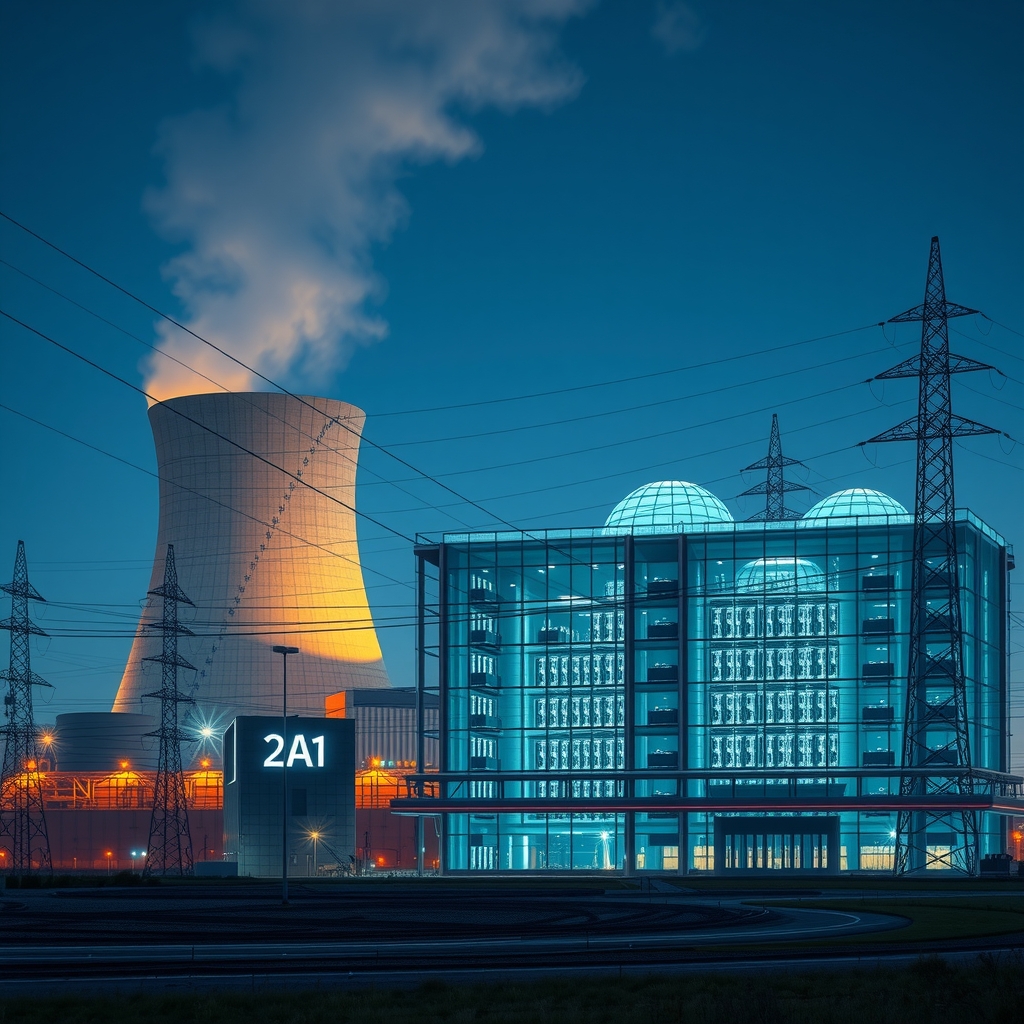
Google is making a major bet on nuclear power as the electricity demands of artificial intelligence continue to rise. The company announced on October 6, 2026, that it is working with Constellation Energy to bring 890 megawatts of additional nuclear capacity to the PJM power grid in the United States.
The agreement is about more than Google's own electricity supply. It is another sign that the AI boom is becoming an energy infrastructure story. Training and running increasingly capable AI systems requires large data centers, and those facilities need electricity around the clock. Google is now trying to secure that power from existing nuclear plants while also using AI to help optimize nuclear operations.
Why Google Needs More Power for AI
AI data centers are fundamentally different from many traditional computing facilities because their electricity demand can grow very quickly as companies add more GPUs and other accelerators. Google's own 2026 environmental reporting says its electricity demand increased 37% year over year in 2025.
That growth creates a difficult infrastructure problem. Building new data centers can happen faster than new power generation and transmission infrastructure can be added. Nuclear plants offer one potential solution because they can provide electricity continuously rather than only when weather conditions allow renewable generation.
Google has already pursued several nuclear-energy initiatives. The company previously announced agreements involving advanced nuclear technologies and the restart of existing nuclear capacity. The new Constellation agreement is different because it focuses on increasing output from existing nuclear assets connected to the PJM grid.
What the 890 MW Deal Actually Means
Google says the collaboration will bring 890 MW of additional clean nuclear capacity onto the PJM grid. The electricity will come from uprates at Constellation's existing nuclear facilities rather than from constructing an entirely new reactor.
That distinction is important. Increasing the output of existing plants can potentially be faster than developing a new nuclear site from scratch, although the projects still require engineering work, regulatory approvals and investment.
Google says Constellation expects to invest more than $4.3 billion in the upgrades associated with the agreement. The companies are also entering into a long-term power arrangement designed to provide predictable demand for the additional generation.
Google Will Also Use AI Inside the Nuclear Business
The agreement goes in both directions. Google is not simply buying electricity from a nuclear operator. Google Cloud's Gemini Enterprise will also be deployed to help Constellation optimize nuclear plant operations.
According to Google, the AI system can help with areas such as analyzing operational information and improving workflows. The broader idea is straightforward: AI needs more electricity, while AI itself may help energy companies operate complex infrastructure more efficiently.
That creates an interesting feedback loop. More AI creates more demand for power. Better AI tools could potentially help utilities manage assets, maintenance and planning. Whether those efficiency gains can keep pace with AI's rapidly increasing electricity consumption remains an open question.
Nuclear Is Becoming Part of Big Tech's AI Strategy
Google is not alone. Amazon has also signed a long-term agreement with Constellation involving the Calvert Cliffs nuclear plant in Maryland, while Microsoft has backed the restart of a nuclear reactor at Three Mile Island.
These deals show that the largest technology companies are increasingly treating electricity as a strategic input for AI. The competition is no longer only about GPUs, models and data. Access to reliable power is becoming part of the competitive advantage.
Why Existing Nuclear Plants Are Attractive
Existing nuclear facilities already have reactors, grid connections, operating teams and established sites. Increasing their output can therefore avoid some of the lengthy development process associated with a completely new plant.
But that does not mean the projects are simple. Nuclear facilities operate under strict safety and regulatory requirements. Any major modification must meet those requirements, and the economics have to work over decades rather than quarters.
The AI Energy Problem Is Bigger Than Google
Google's announcement illustrates a wider challenge for the technology industry. AI companies are building larger models, expanding cloud capacity and deploying AI agents that can run continuously. All of that increases demand for computing infrastructure.
At the same time, electricity grids have to serve homes, factories, transportation and other industries. If large technology companies secure long-term power contracts, they can make major investments in generation more attractive. But grid upgrades, transmission capacity and local community concerns can still become bottlenecks.
This means the future of AI may depend partly on infrastructure that has traditionally had little to do with software: power plants, transmission lines, substations and electricity markets.
Does Nuclear Make AI More Sustainable?
Nuclear power produces electricity without direct carbon emissions during generation, so using more nuclear capacity can help reduce the carbon intensity of electricity used by data centers compared with fossil-fuel generation.
But “cleaner AI” does not mean impact-free AI. Data centers also require land, cooling systems, water resources and large amounts of hardware. The environmental benefit depends on how the entire infrastructure system is built and operated.
What Happens Next?
The immediate focus will be on the engineering and regulatory work required to increase generation from Constellation's plants. Google is also expected to continue pursuing a mixture of energy sources rather than relying on a single technology.
The bigger question is whether the technology industry's appetite for electricity can be matched by new generation quickly enough. If AI demand keeps growing at today's pace, power availability could become one of the factors determining where the next generation of AI data centers gets built.
Abhijeet Take
This is one of the more important AI stories because it shows what happens when AI leaves the software layer and starts reshaping physical infrastructure.
People usually think the AI race is about who has the best model. Increasingly, it is also about who can secure enough electricity, chips, data-center capacity and cooling to actually run those models at scale.
Google's nuclear deal does not solve the AI energy problem by itself. But it sends a very clear message: Big Tech now considers reliable electricity important enough to lock in major power infrastructure for decades.
If AI continues expanding into agents, search, robotics and enterprise software, expect more deals like this. The next bottleneck for AI may not be intelligence. It may be the grid.
Frequently Asked Questions
How much nuclear power is Google adding?
Google and Constellation announced a collaboration intended to bring 890 megawatts of additional nuclear capacity to the PJM grid.
Why does Google need nuclear power?
Google's expanding AI and data-center infrastructure requires large amounts of reliable electricity. Nuclear power can provide continuous generation and can complement renewable energy.
Is Google building a new nuclear reactor?
No. The announced 890 MW capacity is expected to come through uprates and improvements at existing Constellation nuclear facilities rather than a completely new reactor.
Will AI run the nuclear plants?
Google says Gemini Enterprise will be deployed to help Constellation optimize nuclear plant operations. That does not mean the AI will independently control nuclear reactors.
Is nuclear power important for the future of AI?
It could be. As AI data centers consume more electricity, reliable low-carbon generation is becoming increasingly important. Nuclear is one option alongside renewables, storage, natural gas and other technologies.
Sources: Google and Constellation Energy announcements dated October 6, 2026, with additional reporting on the agreement.