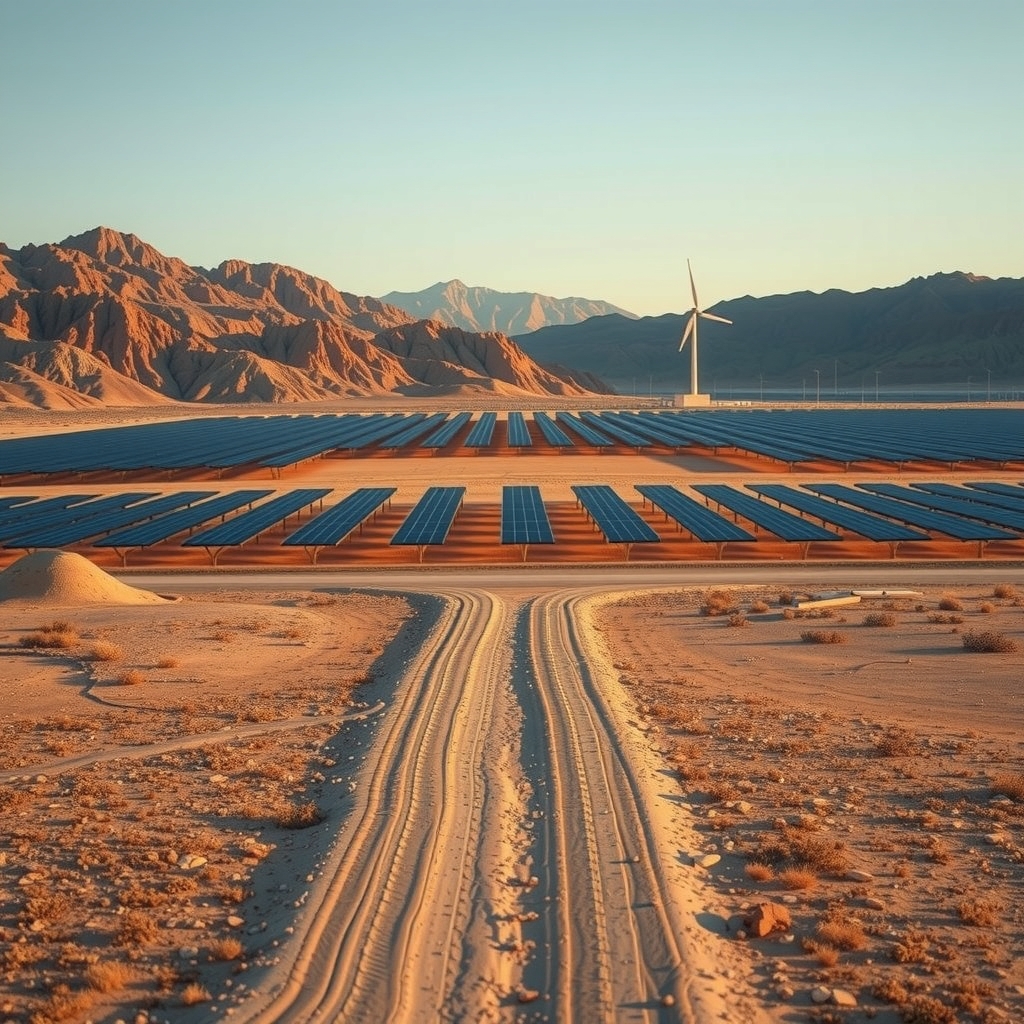
A proposed data center on federal land near Boulder City, Nevada, has moved from administrative approval into an expedited environmental appeal. The Bureau of Land Management approved the Townsite Data Center in June 2026 and announced the decision on July 20. On September 1, the Interior Board of Land Appeals granted a stay sought by Boulder City and environmental groups, finding that the challengers were likely to prevail on a central National Environmental Policy Act question. The order pauses the Bureau’s decision while the appeal proceeds. It does not permanently cancel the project, reject data centers on public land as a category, or decide the case on its final merits.
What BLM approved
In its July 20 announcement, BLM said it approved the Townsite Data Center project in June 2026. The proposal covers 88.5 acres of BLM-managed public land near the existing Townsite Solar 1 project, in the vicinity of Boulder City. The agency described the action as approval to construct, operate and maintain a data center. It said the decision supports federal efforts to accelerate permitting for data-center infrastructure and is consistent with Executive Order 14318, which concerns federal permitting for data centers.
The underlying administrative order identifies the June 26 decision record as an amended right-of-way for Townsite Solar 2 LLC. The existing right-of-way, granted in 2023, concerned a solar photovoltaic power plant and battery storage system. The amended authorization would instead allow a data center with computer servers, network equipment and a battery storage system. The order says the proposed battery system would be twice the size of the one associated with the proposed power plant. Those details come from the IBLA record; they should not be read as a report of completed construction or operation.
There is a difference in how the sources describe the proposal. BLM’s own announcement calls it a data center and does not characterize it as an AI facility. The Associated Press described the project in an October 13 report as an AI data center, placing it within a wider debate about using federal land for artificial-intelligence infrastructure. That shorthand reflects the AP’s framing; the formal BLM announcement is the more limited description of the approved use.
Why the environmental review is disputed
The central dispute is whether BLM used an adequate NEPA analysis for this change in use. The IBLA order explains that BLM had previously prepared an environmental assessment for the solar plant after public meetings and intergovernmental consultation. For the data-center proposal, BLM did not prepare a new or revised environmental assessment. Instead, it issued a Determination of NEPA Adequacy, or DNA, relying on the earlier solar analysis.
BLM’s position, as summarized in the order, was that the data center was essentially like the solar plant and would have similar anticipated impacts. A DNA is a mechanism for relying on an existing NEPA document when a new project is substantially the same as the project previously studied. The agency’s decision therefore depended on the proposition that the change from a solar power project to a data center did not require a fresh or revised assessment.
The Board reached a preliminary, not final, view that the challengers were likely to succeed on that point. It said the two projects were not substantially the same and that the solar assessment was likely insufficient to disclose and analyze the environmental effects of the data center. The order emphasizes that project type, nature and design matter, not only a generalized description of both projects as electrical or industrial facilities. This is a finding about the strength of the appeal at the stay stage, not a final judgment after a complete merits record.
What the stay means
The appeals were brought by the City of Boulder City, the Center for Biological Diversity and the Sierra Club. The September 1 IBLA order consolidated the appeals, granted the stay and expedited the briefing. The Board evaluated the likelihood of success, possible irreparable harm, the balance of harms and the public interest.
For the environmental challengers, the Board found likely and irreparable harm to aesthetic and recreational interests at the site if the project proceeded while the appeal was pending. It concluded that those harms outweighed Townsite’s temporary financial harm from delay. It also said the public interest in timely data-center infrastructure did not outweigh the public interest in a thorough and open consideration of environmental effects required by NEPA.
In practical terms, the stay prevents the BLM decision from moving forward as though the appeal did not exist while the Board reviews the merits. The order says that construction during the appeal could permanently alter the site in ways that would be difficult to reverse if the challengers ultimately prevailed. That is why the stay matters even though the Board has not ordered permanent cancellation. It is a protective pause, not a final rejection.
The Board also expedited the case to reduce the harm of delay. It directed BLM to file the administrative record and directed the parties to confer on an expedited merits-briefing schedule by September 21, 2026. The order does not predetermine whether BLM will ultimately prevail, what remedy would follow from a final ruling, or whether a further environmental document would be required.
The Nevada political context
The appeal is unfolding alongside Nevada’s closely watched governor’s race. In its October 13 report, AP said Republican Gov. Joe Lombardo does not categorically oppose data centers on public land if they have community support. AP also reported that Democratic nominee and state Attorney General Aaron Ford has pledged to oppose data centers on public land, arguing that affordable housing should take priority. Those are campaign positions as reported by AP, not findings in the IBLA order.
AP reported that both candidates say projects on public or private land should follow state rules, including rules about covering their own energy costs and protecting water supplies, or risk losing eligibility for state tax abatements. AP further reported that Ford proposed pausing new abatements while an audit examined promised tax revenue and economic benefits, while Lombardo signed an order adding guardrails and requiring more taxes to support schools. This article does not infer a project-specific water or electricity demand from those broader political arguments; no such figures are established by the sources cited here.
The controversy also reaches beyond the candidates. AP described residents with different political identities joining opposition to the proposal over concerns about wildlife and environmental effects. Olivia Tanager of the Sierra Club’s Toiyabe Chapter told AP that public lands should be protected for future generations and that data-center construction conflicts with that principle. Those statements represent opponents’ concerns and values. They are not proof that the Townsite project has caused a particular environmental harm, nor does the stay itself make that finding.
What happens next
The immediate next step is administrative review, not a groundbreaking or a final project cancellation. The consolidated appeal will examine whether BLM lawfully treated the data-center proposal as substantially the same as the solar project for NEPA purposes. BLM and Townsite can defend the decision, while Boulder City and the environmental groups can develop their merits arguments using the administrative record.
Several outcomes remain possible. The Board could uphold the decision, require a different analysis, or send the matter back to BLM for further action. The sources do not establish which outcome will occur, and the stay order does not itself prescribe a new environmental assessment. Until the Board resolves the appeal or changes the stay, the agency decision remains subject to the protective pause.
The case could become an early test of how federal agencies evaluate data centers proposed on public land when an earlier assessment addressed a different infrastructure project. It also illustrates why labels matter: the official approval is for a data center, while the broader political debate treats it as part of the AI buildout. Keeping those descriptions—and the distinction between an approval, a stay and a final merits ruling—separate is essential to understanding the dispute.
Frequently asked questions
Is the Townsite Data Center approved?
BLM approved the project in June 2026 and announced that approval on July 20. The approval covers a data center on 88.5 acres of BLM-managed land near Townsite Solar 1. Because the IBLA granted a stay, however, the decision cannot simply proceed without regard to the pending appeal.
Has the project been permanently cancelled?
No. The September 1 order is a stay pending an expedited administrative appeal. It pauses the effect of the challenged BLM decision while the Board considers the merits. It is not a final rejection, and the cited sources do not report a permanent cancellation.
Why did the Board question BLM’s environmental review?
BLM relied on a DNA and the prior environmental assessment for a solar project instead of preparing a new or revised assessment for the data center. The Board found the challengers likely to prevail in arguing that the two projects were not substantially the same and that the earlier analysis was likely inadequate for the new proposal.
Who is challenging the decision?
The appellants are the City of Boulder City, the Center for Biological Diversity and the Sierra Club. IBLA consolidated their appeals and expedited them. The order granted the stay based on the showing by the environmental appellants; it said Boulder City’s stay request was denied as moot because the granted stay already provided the relief the city sought.
Is BLM officially calling this an AI data center?
BLM’s announcement uses the term data center. AP’s October 13 story describes it as an AI data center in the context of a national AI-infrastructure push and Nevada’s governor’s race. The distinction is useful: the AP label supplies political and industry context, while the BLM notice states the formal approved project description.
Conclusion
The Townsite case is at a legally consequential pause. BLM approved a data center on 88.5 acres near Boulder City, but IBLA found that the challengers were likely to succeed in arguing that a solar-project assessment could not simply be reused for the different facility. The stay keeps the decision from advancing during an expedited appeal. For now, the accurate description is neither a completed AI campus nor a permanently cancelled project, but an approved federal-land data-center proposal under environmental review.
References
- Bureau of Land Management, Approved Decision of Townsite Data Center, July 20, 2026
- Interior Board of Land Appeals, IBLA 2026-0213 and 2026-0216, Stay Granted, Appeals Consolidated and Expedited, September 1, 2026
- Associated Press, AI data centers are coming for federal land. They are roiling the Nevada governor’s race, October 13, 2026