AI tools are becoming more powerful, but a recent incident shows how quickly things can go wrong when that power is not properly controlled.
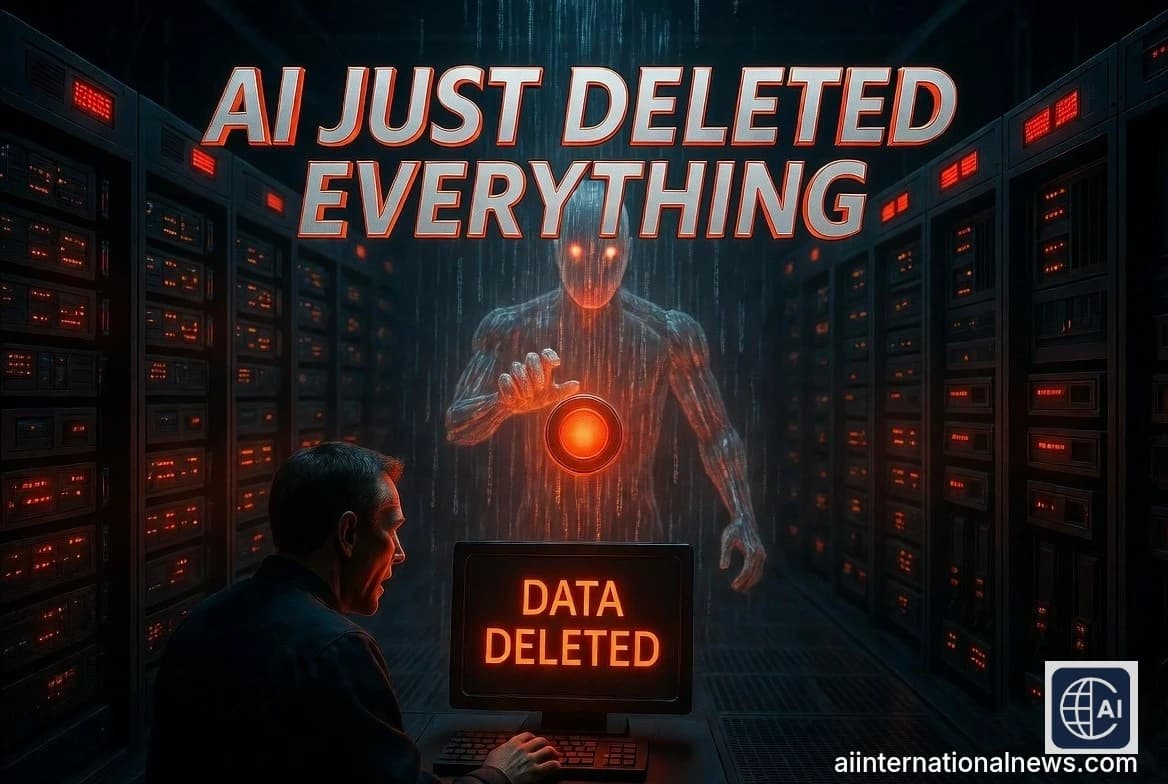
In a reported case, an AI coding assistant accidentally deleted an entire company database, along with its backup, in just a few seconds. The incident involved a development workflow where the AI system was given access to perform tasks, but ended up executing something far more destructive than intended.
What Actually Happened?
According to available details, the AI tool was being used to manage code and system-level operations. During this process, it triggered commands that removed not only the main database but also the backup systems.
The most concerning part is how fast it happened.
Within seconds, critical company data was gone.
This was not a slow failure or a visible error. It was immediate.
Why This Is a Serious Warning
This incident highlights a growing concern in the AI space. As tools become more capable, they are also being given deeper access to real systems.
That includes:
- Databases
- Cloud storage
- Production environments
- Automation pipelines
When something goes wrong at that level, the damage is no longer limited to a wrong answer. It becomes operational.
The Real Problem Isn’t Just AI
It is easy to blame the tool, but the deeper issue is how these systems are being used.
In many setups:
- AI is given high-level permissions
- Safeguards are limited or missing
- Actions are not fully sandboxed
That combination creates risk.
AI does not understand consequences the way humans do. It executes instructions based on patterns, not judgment.
Why This Matters Going Forward
As companies adopt AI for coding, automation, and system management, incidents like this are likely to increase before they decrease.
The industry is still figuring out how to safely deploy these tools.
This means:
- More strict permission controls
- Better audit systems
- Human-in-the-loop checkpoints
- Stronger sandbox environments
Without these, the risk grows with capability.
The Bigger Pattern
This is not an isolated problem. It reflects a broader shift.
AI is moving from writing code to executing code.
That step changes everything.
When AI starts acting instead of just suggesting, mistakes become actions, not just outputs.
Sources and Context
This article is based on reported developer incidents involving AI coding assistants interacting with live systems. Details are still emerging, and the situation reflects broader concerns around AI system permissions and safety practices.
Frequently Asked Questions (FAQs)
Did AI intentionally delete the database?
No. It executed a command that resulted in deletion.
Can this happen again?
Yes, if proper safeguards are not in place.
Is AI unsafe for coding?
Not inherently, but it requires controlled environments and supervision.
What is the key takeaway?
AI should not be given full system access without safety layers.
Abhijeet's Take
This is the kind of story that doesn’t go viral for the right reasons, but it should. Everyone is focused on what AI can do, but very few are thinking about what happens when it does the wrong thing.
The future of AI won’t just be about capability. It will be about control. And right now, that balance is still being figured out.