BREAKING NEWS / GUIDE: The ultimate promise of Artificial Intelligence in healthcare has arrived. In a milestone moment for humanity, the world's first universal cancer vaccine candidate—predicted entirely by an advanced AI model—has successfully cleared preclinical hurdles and entered Phase 1 human trials. This marks the beginning of the real fight to move cancer treatment from 'cure' to 'prevention'.
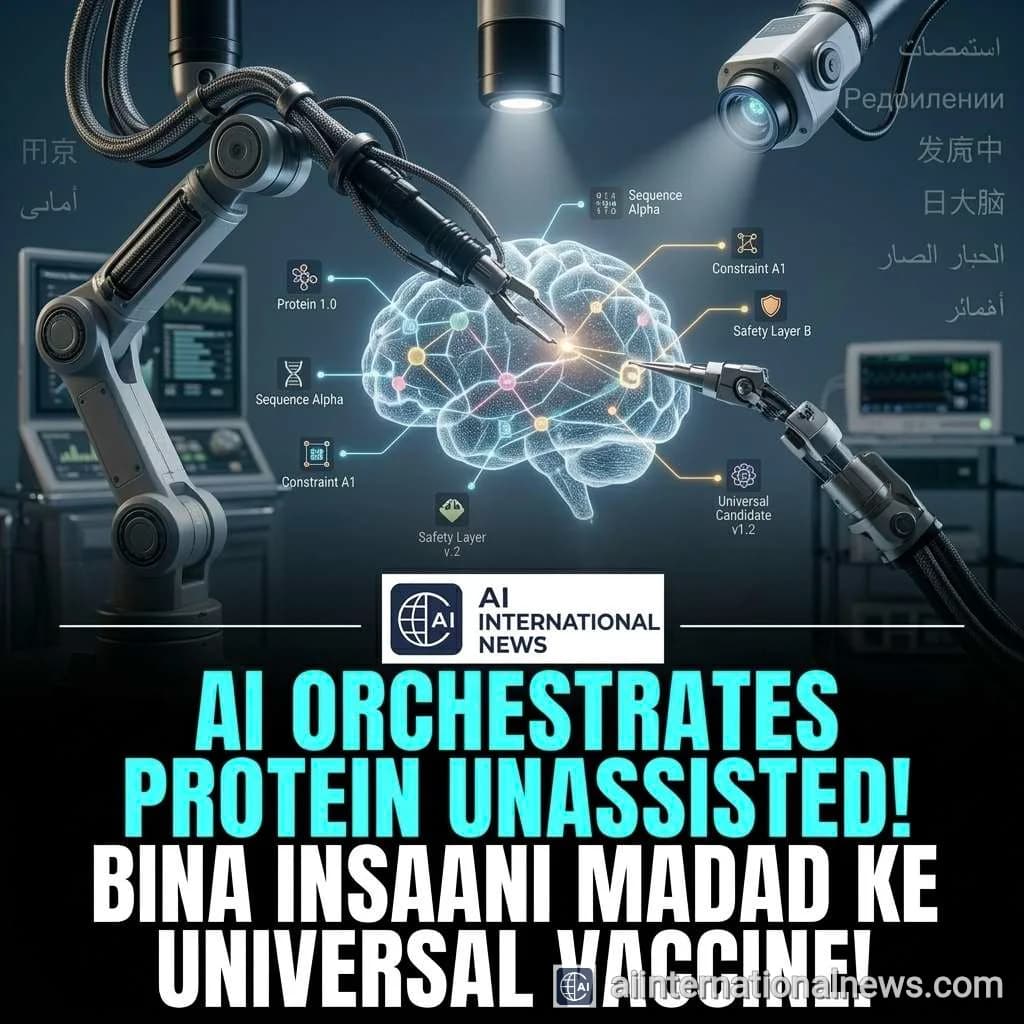
For decades, researchers have chased a 'universal vaccine'—a single shot that could train the body to find and destroy any cancerous growth. The problem was identifying common protein markers across dozens of different, constantly mutating cancer types. Human scientists couldn't find them, but AI did. By analyzing the proteomes of millions of diverse cancer samples from across the globe, an autonomous AI model identified a specific, stable protein sequence (antigen) present in over 90% of common solid tumor cancers. [Image placeholder: sophisticated robotic arms and high-tech gear performing micro-manipulation on protein structures, similar in style to previous medical automation news images]
Step 1: The AI Prediction Phase (Solving the Unsolvable)
The core intelligence used a technique known as 'Computational Antigenic Mapping'. The AI simulated how different cancers grow, mutate, and survive. In less than 18 months, it achieved what teams of oncologists had failed to do for fifty years: it mapped a specific, recurring genetic signature that is essential for cancerous growth. Once identified, the AI could then predict the exact molecular structure needed for a vaccine to train the human immune system to recognize and attack that signature *before* a tumor forms.
Abhijeet's Take: This is the true power of AI. It's not about making a chatbot that writes emails; it's about making a mind that solves the equations that protect life. For generations, cancer has been a death sentence for millions, creating fear and financial ruin. This breakthrough proves that with AI, humanity can start solving 'unsolvable' biological problems at an exponential pace. This is the transition from cure to prevention—the real paradigm shift.
Step 2: Preclinical Validation and Security Guardrails
Before moving to humans, the AI-predicted structure had to be validated. Robotic orchestration systems (like the automated labs we've seen in other high-tech industries) built the actual protein candidates based on the AI's digital blueprints. They then tested them against hundreds of diverse cancer lines and in animal models. The AI, acting as its own safety agent, constantly monitored the immune response to ensure that the vaccine *only* attacked cancerous markers and did not trigger a dangerous immune-overreaction against healthy tissue (an essential safety guardrail).
How This Universal Vaccine Differs from Standard Treatment
- A Standard Cure: Attacks a *specific* tumor that already exists in a *specific* patient.
- AI Universal Candidate: Teaches your immune system a *general rule* to find all tumor types *before* they can grow large.
- Human Trials: Now testing if a diverse human population reacts as predicted without side effects.
Conclusion: Scaling Your Digital Health Workforce
Phase 1 trials will strictly focus on safety, ensuring a small group of volunteers tolerate the vaccine. Phase 2 and 3 (the real efficacy tests) will follow. While widespread availability is still years away, this success proves the model. We are essentially cloning biological intelligence to build a decentralized, customized, and preventative digital health workforce for every individual. Within this decade, requiring complex surgery to remove a tumor might sound as reckless as operating without anesthesia.
Frequently Asked Questions
Is this a cure for all cancers?
Not exactly. It's a preventative vaccine designed to train your body to stop the most common types of solid tumors from ever growing out of control. It will not replace existing cures for established, complex cancers, but rather act as a powerful preventative layer.
When will it be available to the public?
It's too early to say. Trials take time to prove safety and efficacy. Phase 1 human trials are just starting in early 2026. Typically, this process takes 4-7 years, though the AI's data may allow regulators (like the FDA) to accelerate the timeline responsibly.
Does it cost money to run my own AI agent?
It depends on your setup. Running a local open-source model on your own PC is completely free. If you use cloud-based models like Claude or GPT, you will typically pay small fractions of a cent per 'API token' (the amount of text the AI reads and writes).