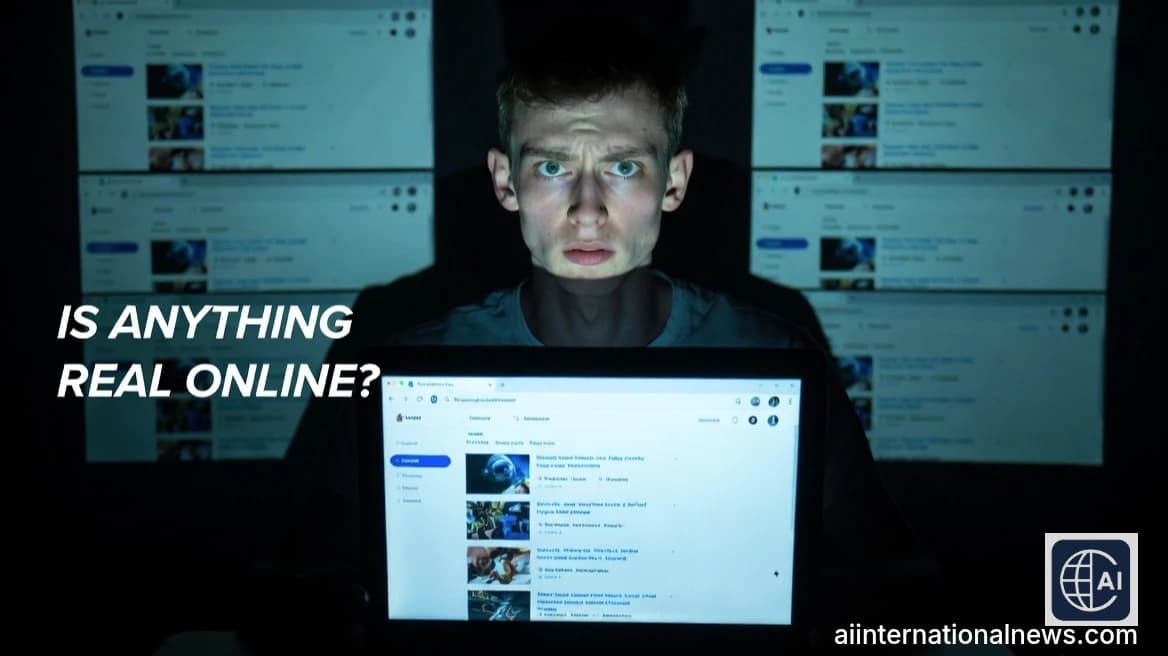
The internet has always been messy, but at least it felt human. Blogs had personality, forums had real opinions, and even low-quality content had some trace of a real person behind it.
That is starting to change.
A growing share of new websites and pages are now being generated by AI. In some estimates, a significant portion of fresh content online is no longer written directly by humans. This has led to a renewed discussion around something known as the “Dead Internet Theory.”
What Is the Dead Internet Theory?
The idea itself is not new. The theory suggests that a large part of the internet is no longer driven by real human activity, but by bots and automated systems.
For a long time, it sounded exaggerated.
Now, with generative AI tools becoming widely accessible, the conversation feels less theoretical and more practical.
What Is Actually Happening?
AI tools can now generate full articles, websites, product descriptions, and even entire content networks in minutes.
This has led to:
- Mass creation of SEO-focused websites
- Auto-generated blogs at scale
- Content farms powered by AI
- Low-cost website expansion strategies
On the surface, these websites may look legitimate. But many are built primarily to capture traffic, not to provide original value.
Why This Matters for Users
For everyday users, this shift creates a new problem: trust.
When more content is generated automatically, it becomes harder to know:
- Who actually wrote something
- Whether the information is verified
- If the content is original or recycled
Search results may still look full, but the depth behind them can feel thinner.
Impact on SEO and Content Creators
This trend is also affecting creators and publishers.
When AI-generated content floods the internet:
- Competition increases dramatically
- Ranking becomes harder
- Original content can get buried
At the same time, search engines are trying to adapt by prioritizing quality and helpfulness over volume.
But that balance is still evolving.
Is the Internet Really “Dead”?
Not exactly.
Real people are still creating, sharing, and interacting online. But the ratio is shifting.
The internet is not disappearing. It is being layered with automation.
The challenge is separating signal from noise.
What Could Happen Next
If this trend continues, we may see:
- Stronger content verification systems
- More emphasis on trusted sources
- Rise of smaller, high-quality communities
- Greater skepticism toward generic content
In a way, the value of human perspective may increase as AI-generated content becomes more common.
Sources and Context
This article is based on ongoing discussions around AI-generated content growth, SEO trends, and the increasing presence of automated websites across the internet. Exact figures may vary, but the rise of AI-driven content creation is widely acknowledged.
Frequently Asked Questions (FAQs)
Is most of the internet now AI-generated?
No, but the share of AI-generated content is increasing quickly.
What is the Dead Internet Theory?
It suggests that bots and AI dominate online content and activity.
Should users be worried?
Not worried, but more aware and selective.
What is the key takeaway?
Content volume is increasing, but trust is becoming more important.
Abhijeet's Take
This is one of those trends that doesn’t hit all at once. It builds slowly until you start noticing that a lot of content feels the same.
The real advantage going forward will not be in producing more content, but in producing content that actually feels human.