Humanoid robots have always felt like something from the future — impressive to watch, but far from everyday use.
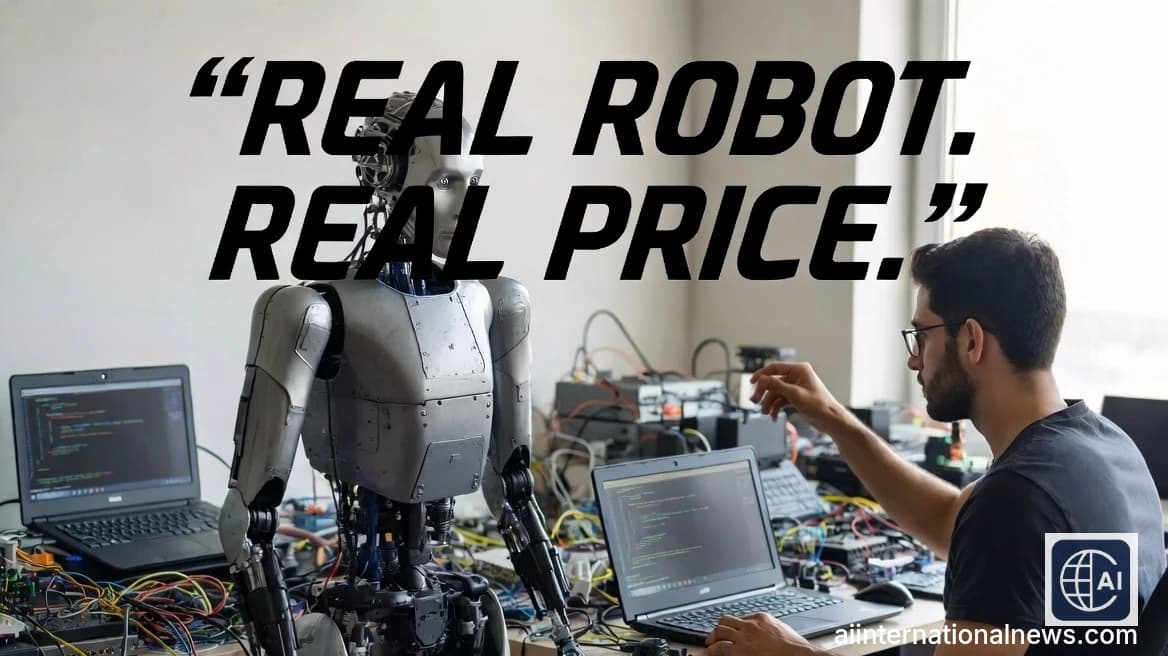
That gap may be starting to close, at least for developers. A new humanoid robot priced around $4,000 is now being positioned as a practical platform for building and experimenting.
At this price point, the conversation shifts from “impossible tech” to “accessible tool.”
What Makes This Robot Interesting
The focus here is not on mass consumer adoption, but on giving developers something they can actually work with.
Instead of being a finished product, it acts more like a base system that can be programmed, tested, and improved.
Why Price Changes Everything
Most humanoid robots have been extremely expensive, limiting them to research labs and large companies.
Bringing the cost down significantly changes who can access the technology.
- Independent developers can experiment
- Startups can build new applications
- Universities can expand research
This is how ecosystems start.
What Can Developers Do With It?
The real value depends on how people use it.
- Build AI-driven movement systems
- Test real-world automation scenarios
- Create human-like interaction models
It is less about what the robot does today, and more about what it enables.
The Limitations
Even at this price, it is still early-stage technology.
- Limited real-world autonomy
- Requires technical expertise
- Not ready for mass consumer use
This is a developer-first product, not a finished solution.
Why This Matters
Every major technology shift starts with tools becoming accessible.
If more people can experiment with humanoid robotics, progress tends to accelerate.
This may not lead to immediate breakthroughs, but it builds the foundation.
Sources and Context
This article is based on recent announcements around a lower-cost humanoid robot platform designed for developers. Capabilities may evolve as the ecosystem grows.
Frequently Asked Questions (FAQs)
Is this robot for consumers?
No, it is mainly for developers and research use.
What is special about the price?
It is significantly lower than traditional humanoid robots.
Can it work autonomously?
Limited autonomy, depending on programming.
What is the key takeaway?
Humanoid robotics is becoming more accessible.
Abhijeet's Take
This is less about the robot itself and more about what happens when more people can build with it.
Affordable tools tend to unlock creativity faster than high-end prototypes.